Gardens

I once had a partner who commented in a context I cannot recall: “I don’t romanticize the apocalypse.” She was referring to the tendency in contemporary culture to be fascinated with things like homesteading and the fall of society and dystopian fantasy narratives. Another friend, while talking about dystopian literature, simply said: “People want change. That’s why those stories are so popular.” They’re both right. Another friend and I were talking about this yesterday while she experienced her first typhoon: more recent capitalizers on the dystopian trend were uninteresting to her, but Octavia Butler, Bradbury: the prescience with which authors before the internet predicted our dystopian techno-shift were remarkably imaginative and seem, in retrospect, to have had a very dynamic sense of foresight.
Posts and reels and influencers are capitalizing on the destabilizing effects of this presidency, and more urgently of the war in Iran and the blockade of the Strait of Hormuz with a lot of sensationalist content about food scarcity, shortages and inflation. Other historical content is popping up, with the remarkable statistic that Victory Gardens eventually produced 40% of the vegetables consumed in the US. The Smithsonian Library page about victory and urban gardens even includes a comic book cover from the 1940s where Superman harvests a basket of lettuce and carrots.
I have various memories of human basic needs being drilled into us in elementary school: water, food, clothing and shelter. I wonder sometimes if there’s actually a fifth need in there, which is attention to change over time. It’s a need more difficult to articulate, but in highly mobile societies - whether due to exile or things like the high rate of moving house in the US - I suspect that there are negative effects to not being able to observe growth or process. It’s not good for attention to be driven by scattered attention to a million things, like jumping from a protest movement to food scarcity to fashion to the Epstein files: aka the experience of scrolling or watching content on social media.
Of course, this has been discussed as a tactic of this presidency - that fast and furious fire starting machine - but I think the metaphor of rapidly scrolling through our own lives has become culturally pervasive and relates back to these ideas about consumption and autonomy that I find myself pondering again and again. I don’t have any great conclusions. I was struck, however, to listen to an audio book of Plato’s Republic recently (I’m running out of easily available nonfiction content of a certain density through the public library) to notice that so many of our contemporary conversations are conversations that have changed very little since the Greeks. (I also think Socrates is an absolutely insufferable asshat, but that’s a topic for another day).
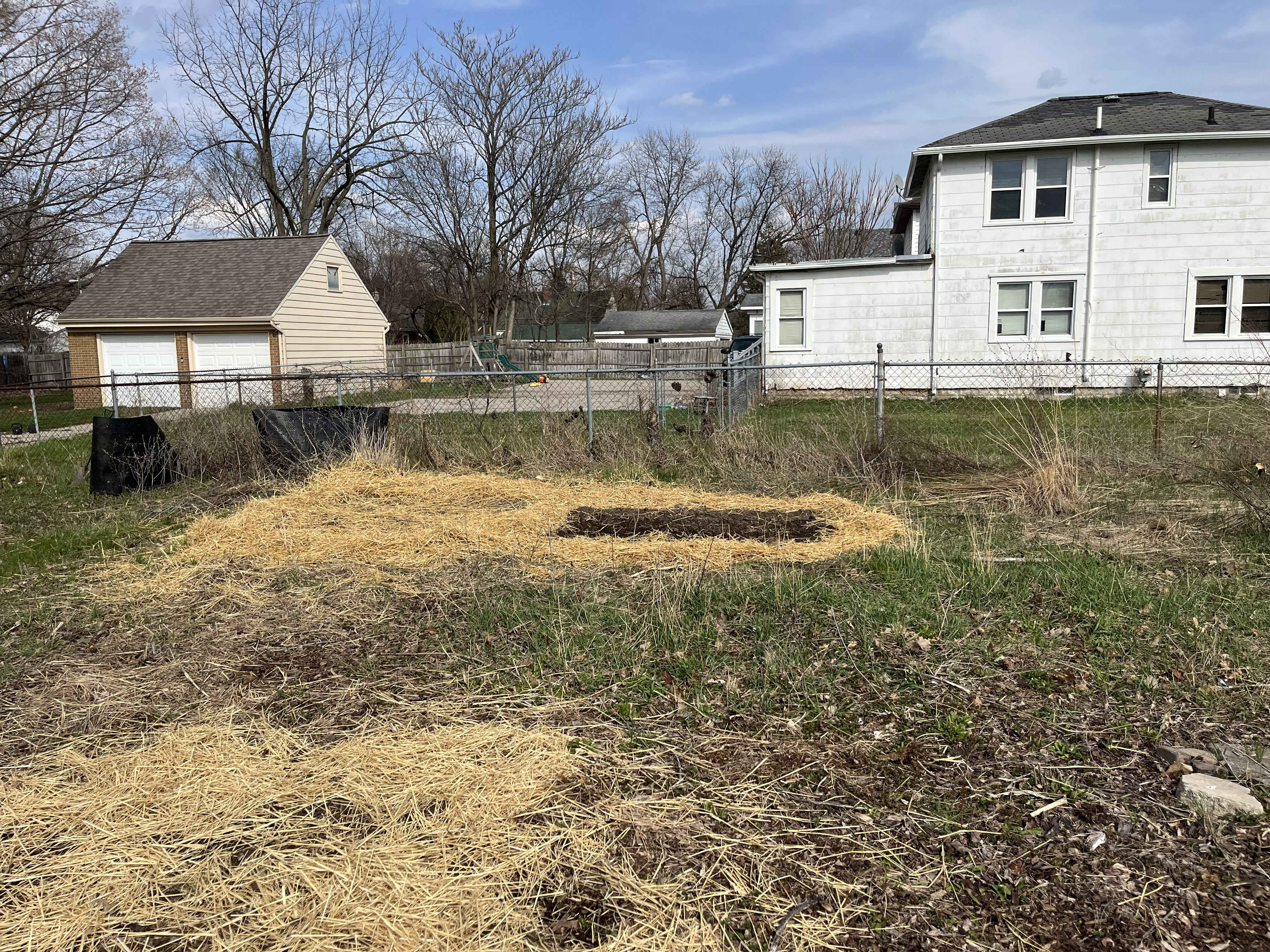
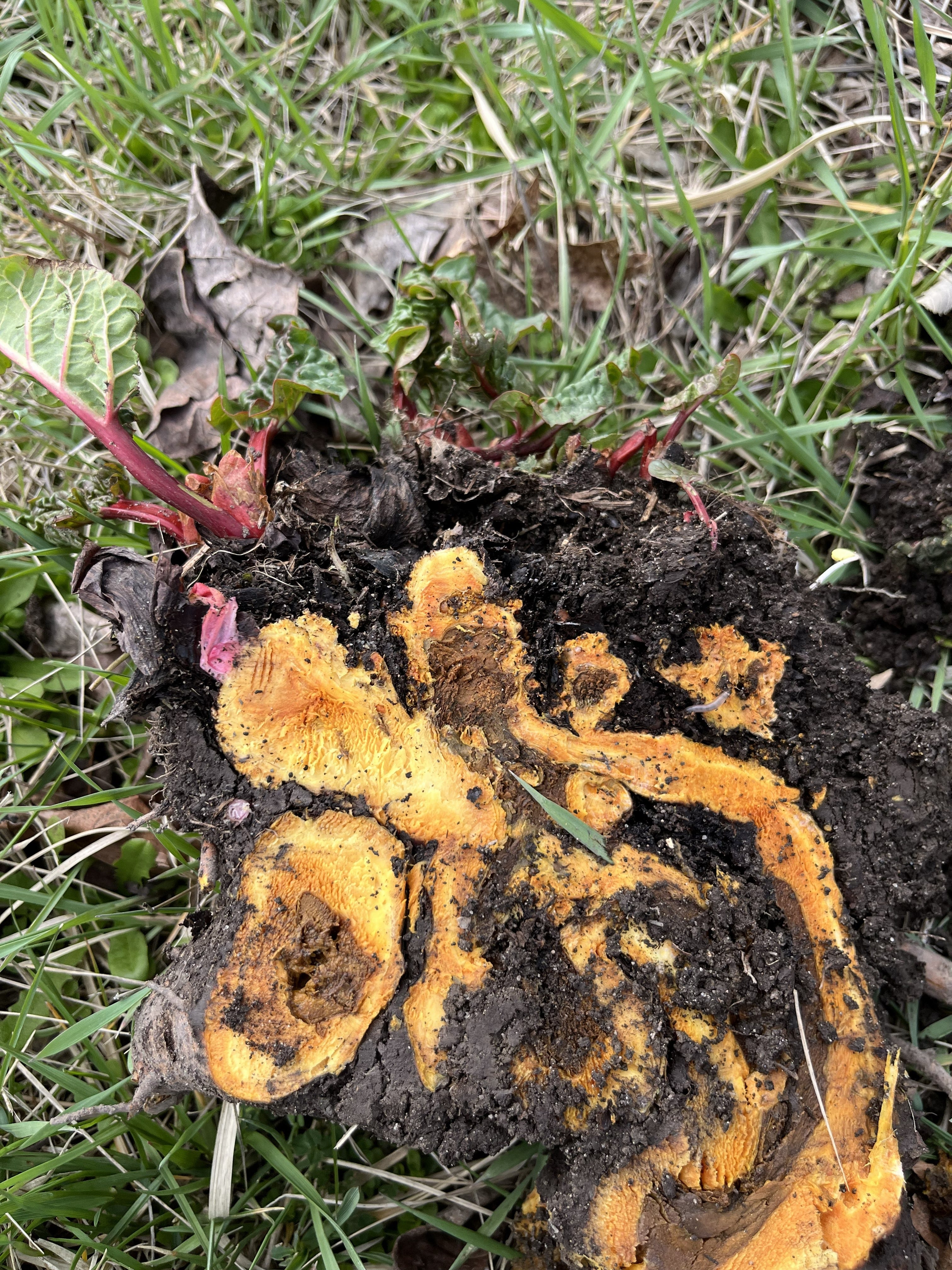
A lot of these thoughts are jumbled, and sparked by a recent trip to the garden lot. I have three fruit trees growing. I divided up my rhubarb crown that was in my backyard and tried to transplant it to the lot. It never did well in the shady spot I had available and this new spot will give it more sun. The crown was enough for three new plants. The woody rhizome is also bright orange, which surprised me.
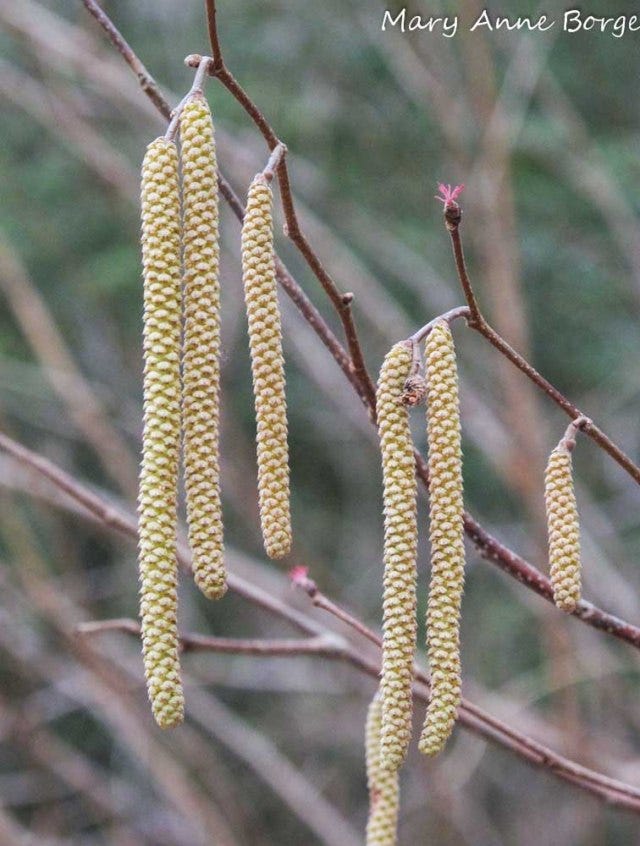
The asparagus I planted should emerge imminently, and the American hazelnut bushes I got years ago have sprouted their first flowers. They look like tiny pinecones.
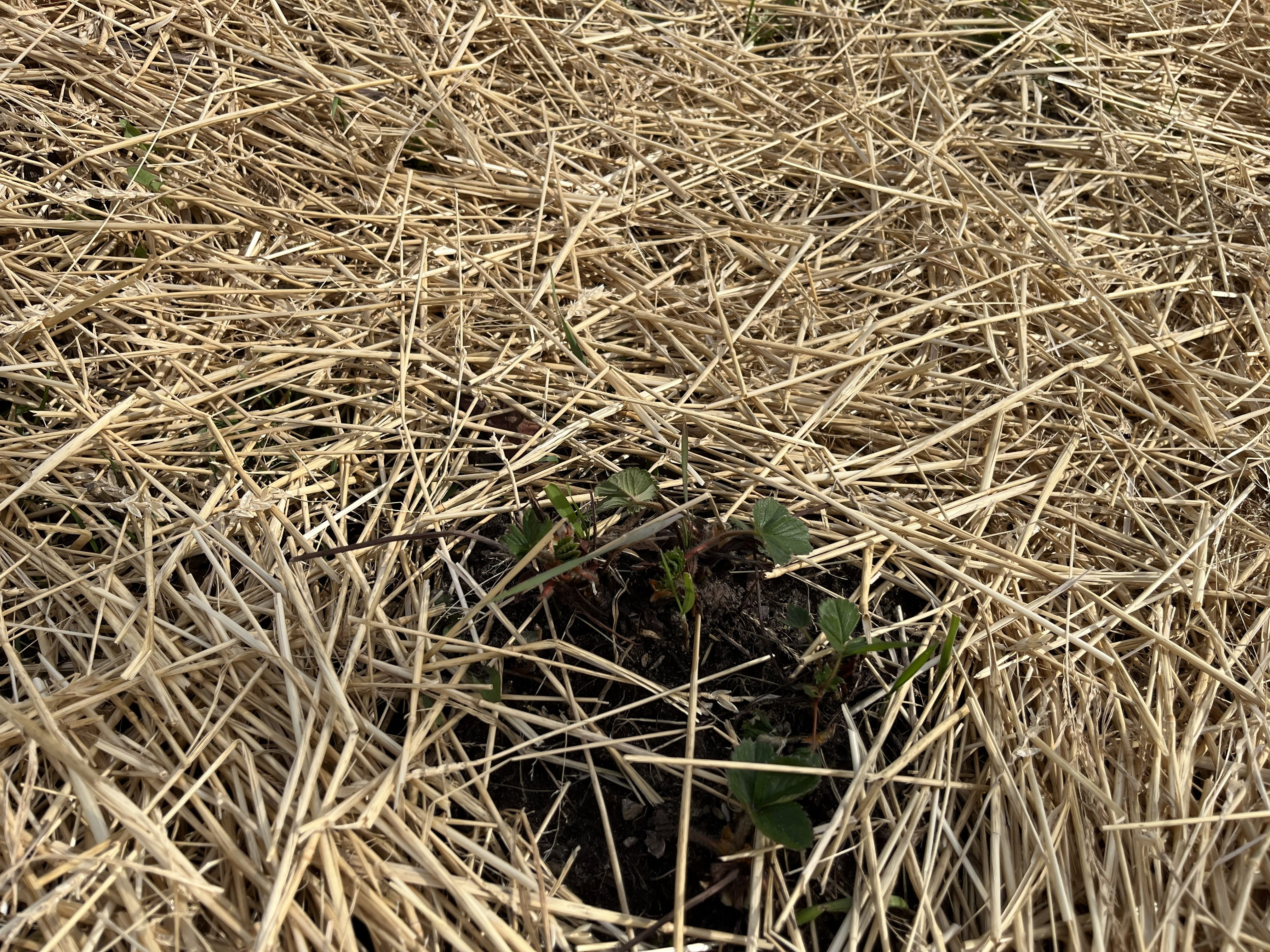
In front of the fruit trees, the little slips of plants that will eventually yield American plumbs and persimmons, that bed of strawberries dreamed of has materialized. It’s covered in straw right now, but for the next few years as the trees grow should turn into a thriving bed of berry producers.
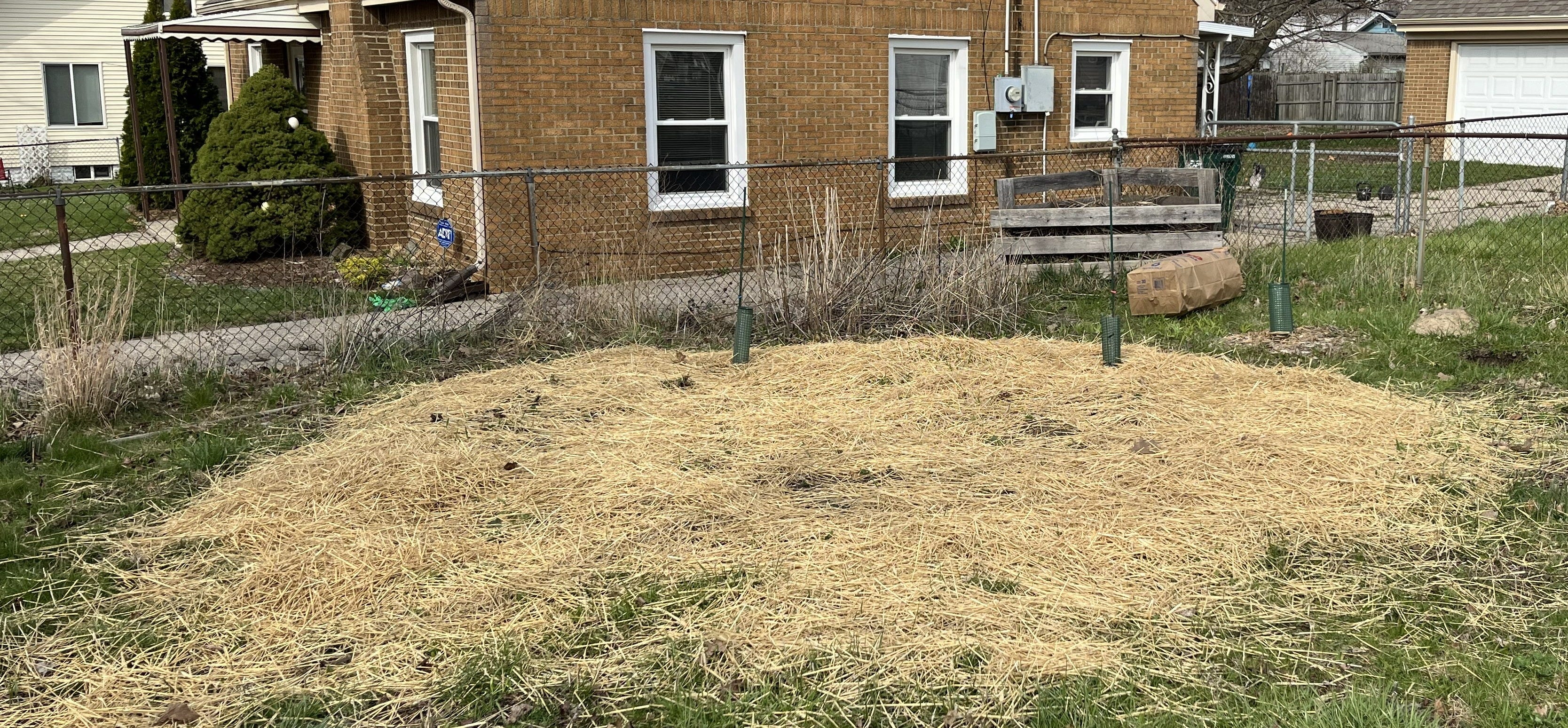
You can see the little dots on the surface that look like this up close:
And somehow, even though I have a puppy and work all the time, the 20 minute increments I’ve grabbed have turned into a tilled vegetable bed with Bok choi, watermelon radishes, carrots, potatoes, lettuce, beets and chard. Whether they actually grow is anyone’s guess. But something always does.